
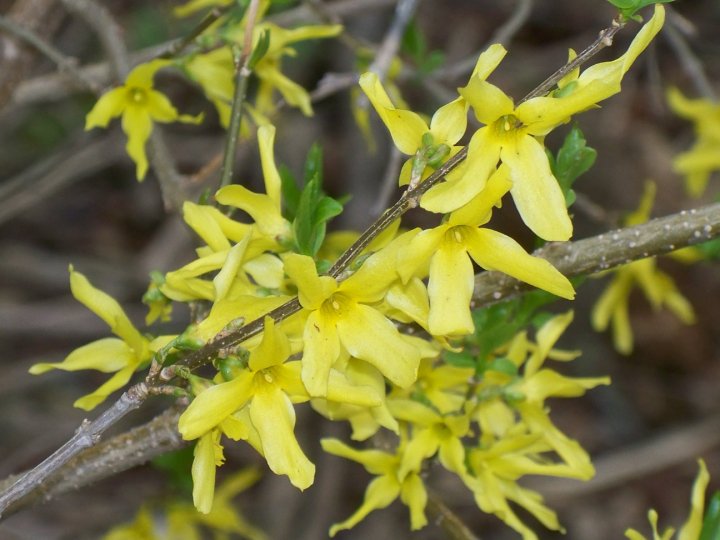

In the Spotlight: The Miracle of Spring—Nature’s Reawakening

Each spring we look forward to finding the tell-tale signs of winter’s end: those first plants with their delicate green shoots pushing through the soil, tree buds emerging, and early blooms bursting with colour. The perennial white snowdrops and marsh marigolds often win the race among ground plants but, don’t forget to look UP to greet those first green leaves emerging from tree buds, and the blossoms of early-blooming trees and shrubs such as red maple, sweet crab apple, serviceberry and red osier dogwood. And, a little later in the spring, be sure to take in the splendour of cherry blossoms!

This miracle of spring involves many factors working together. Sunlight hours increase, activating tree hormones, spring rains soak the soil, allowing roots to thaw, and both air and soil temperatures rise helping to stimulate new growth. But, HOW exactly do water molecules defy gravity to reach when those buds that were formed in the fall but have been dormant all winter? It isn’t a miracle; it’s all because of the brilliant engineering of nature and, xylem tubes!

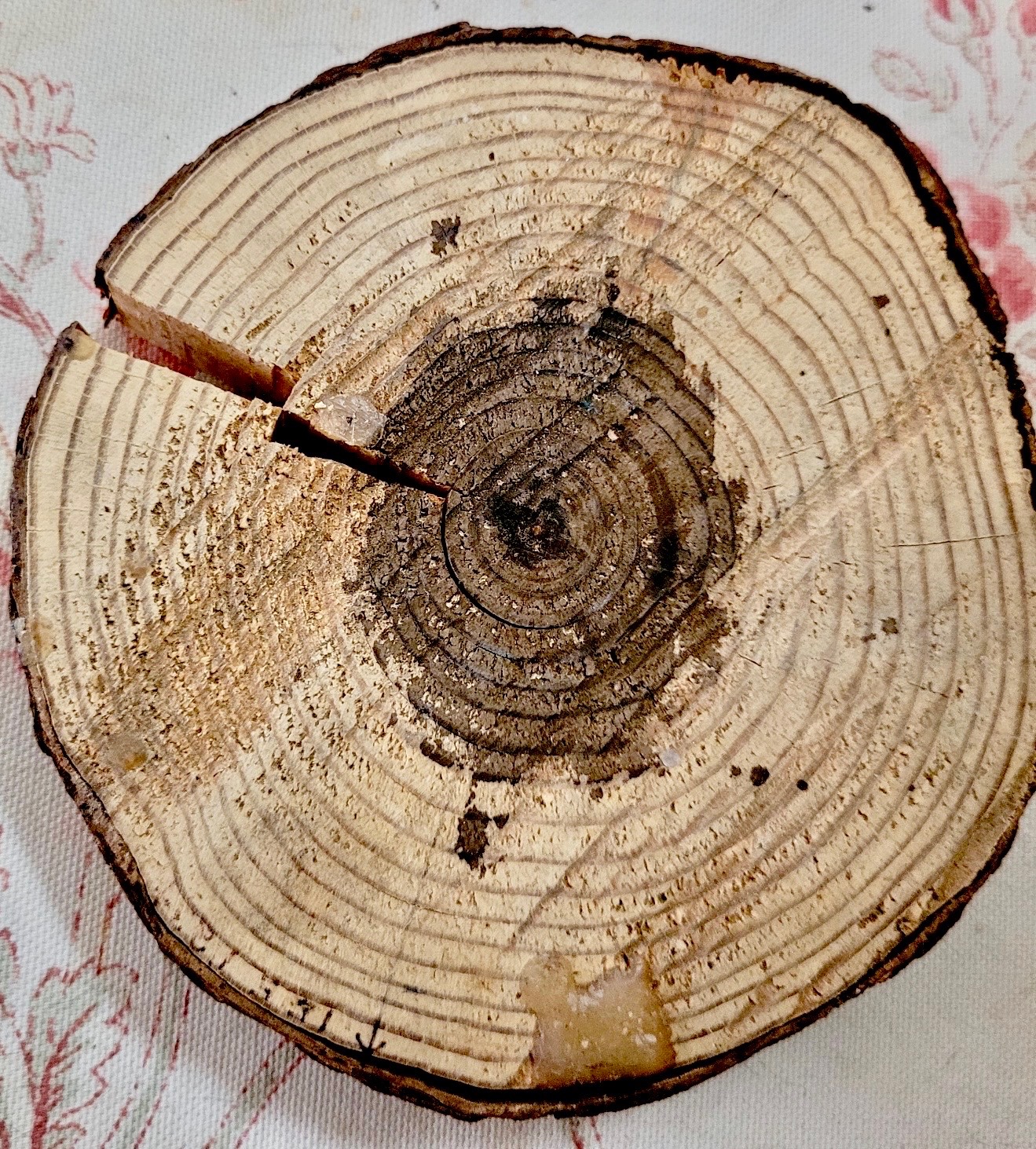
Ever noticed the alternating light and dark growth rings on a tree stump? That’s because each year’s growth produces TWO rings, a lighter one in the spring and a darker one in the summer. This pattern is because of the tree’s xylem cells, cells that form water-transporting tube-like structures that make up most of a tree’s wood. During the spring, these xylem cells develop larger diameters and thinner walls, while in the summer and fall, they grow with smaller diameters and thicker walls, creating the visible pairs of rings we see.

Jack Pine Growth Rings

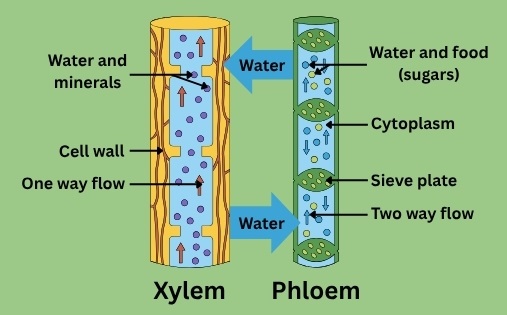
But, HOW exactly are xylem tubes built? Once again, it’s not a miracle; it’s a remarkable evolutionary adaptation of nature! Starting from the outside: The bark consists of multiple layers. Beneath the outer dead cells lies the living phloem, which transports sugars and nutrients made by the leaves to the rest of the plant. Just inside the phloem is the cambium layer—a thin, actively dividing tissue that sits between the phloem (outer bark) and xylem (wood). What’s remarkable is that this single cambium layer produces both xylem cells (which transport water upward) and phloem cells (which transport sugars), while maintaining its own thickness. When the cambium divides, one daughter cell becomes xylem (growing inward) while the other becomes phloem (growing outward), but the cambium itself remains the same.

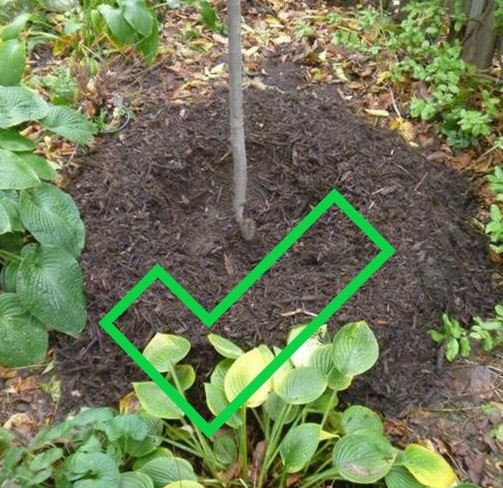
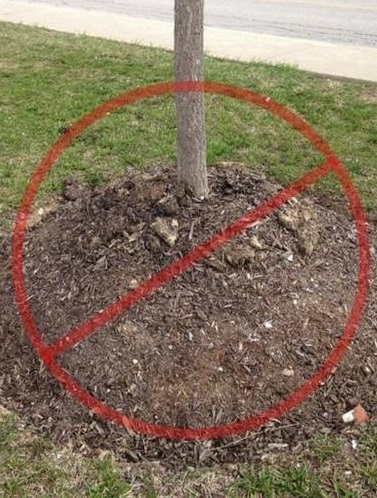
Animals love to gnaw on tree bark to reach its sweet phloem BUT if the cambium layer is eaten all around the trunk, the tree will not be able to grow new cells, and it will die, no matter its age! That’s why young trees are often planted with tree guards, to avoid this “girdling” that can be caused not only by feasting animals, but also lawn mowers and whipper-snippers! Tree girdling also happens with “volcano” mulching—so, to enjoy the new leaves and blossoms on your trees year after year, when mulching, be sure to do it correctly! Check out ACER’s Mulching 101 to learn more!

Good Mulching
Mulch BAD
Bad Mulching

Some fun activities to try this spring: Outdoors, select a few species of trees and WATCH their buds transform over a few weeks. Indoors, stick a dormant forsythia branch into water and WATCH it bloom! Or, place the cut end of a celery stick into some coloured water and WATCH the coloured water travel up to its leaves!

And, as you venture out into nature this spring, be sure to check out our Spring Discovery Walk before you head out!

Published May 8, 2026

Explore our full Spotlight series HERE!

More Posts