

Take a walk outdoors this spring!
For a printable (PDF) version of this Walk, click here.

Spending time in nature is a proven source of physical and mental wellness and can sharpen your powers of observation, so put on your comfortable shoes, tuck your phone away and get outdoors! Make getting outside for a walk a habit, even if just around the block or to a local park. By getting outdoors and exploring nature, you will witness many life cycles at play, give yourself room for quiet and peaceful contemplation and enjoy the benefits that only fresh air can provide.
“Our identity includes our natural world, how we move through it, how we interact with it, and how it sustains us.” – David Suzuki
Before you go out.

Consider bringing a camera or smartphone and/or a notebook and pencil to record your observations and any ideas or questions you might want to follow up on. Dress for comfort, safety, and the weather; sidewalks may be free of ice and snow, but the ground in parks, fields and forests may be wet and slippery. Bring along some water (preferably in a reusable bottle) and a snack or two. Consider also investing in hiking boots and/or hiking poles if you plan to hike a more challenging trail. And remember to protect yourself from the sun, and, when out in the woods, from ticks.
“With the coming of spring, I am calm again.” – Gustav Mahler
Observe the trees.

Look at the trees along your route. Notice their height, their shape, the texture of their bark, and their buds and flowers, as they appear. Which ones can you identify before they come into full leaf? Notice their relative height, the shape and texture of the bark, and the buds, leaves, and flowers, as they appear. For trees you cannot identify, take some photos, and note down the location and any identifying features, then consult online tree identification resources or ACER’s TreePedia. Ask yourself, is this a native tree? If you are not sure, check out this resource from Natural Resources Canada. You might also want to photograph trees you want to visit again later in the year, to see how their appearance changes throughout the seasons. For an additional challenge, check out ACER’s Tree, Shrub and Flower Activity Suites here!
“Deep down at the molecular heart of life, the trees and we are essentially identical.” – Carl Sagan


Observe the buds and blossoms.

As you walk, you may see a spectacular magnolia in full bloom, a birch draped with dangling yellow catkins, or the striking brilliant yellow display of forsythia. But look also for the flowers of trees we rarely think of as flowering, like oaks. Deciduous trees (angiosperms) all flower; conifers (gymnosperms) do not. But all produce pollen. Think about the ways the plants you see are pollinated. We rely on insect pollination to produce much of our food — that’s why news stories about declining bee populations and the perils of pesticides are so important. Trees and plants with heavy, sticky pollen need the help of insects, bats, and birds to transport it blossom to blossom, tree to tree. For an additional challenge, check out ACER’s Tree, Shrub and Flower Activity Suites here!
“In every walk with nature, one receives far more than he seeks.” – John Muir
See if you can spot these blossoms and buds on your walks this spring!


Observe the signs of re-emerging and returning wildlife.
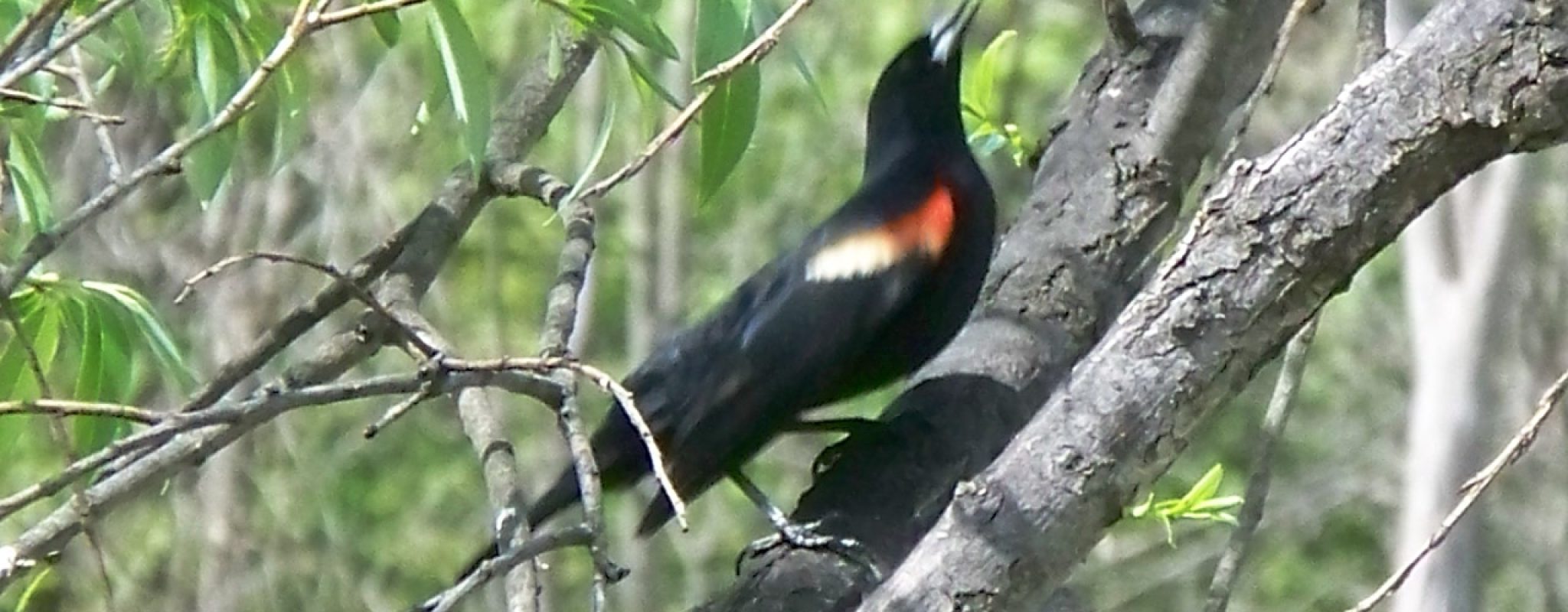
We all look forward to groundhog day, hoping it won’t see it’s shadow. But, a surer sign that spring truly is in the air, is seeing a groundhog emerge from its burrrow! There is a distinct increase in wildlife activity as spring arrives, as they as they emerge from their winter sleep, begin spring mating or return from their winter sojourns. Look up and listen for male red-winged blackbirds with their insistent konk-ke-ree song. You might also see Canada Geese returning from the south—while some return as early as the spring thaw, others take their time. In the forest, look down and you might spy the large clusters of eggs of the wood frog, a species that prefers to breed in shallow, fish-free pools of water after early springime rains. Some will even start to breed when there is still ice in the water!
“Come the spring with all its splendour, all its birds, and all its blossoms!”—Christina Rossetti
Pollen is in the air.

Wind-borne pollen from pines, spruce, firs, and many broad-leafed and hardwood trees is light, dust-like, and abundant, and usually peaks in April and May, but climate change is causing less predictable weather and warming, and this can sometimes bring an earlier start to pollen production depending on the year. Experts are now advising people with pollen allergies to wear N-95 or cloth masks to filter out pollen from the air they breathe. In general, pollen counts are higher in the morning and on warm breezy days, and lower when it’s cool and damp. If you have springtime allergies, consider checking the pollen count at websites such as theweathernetwork.com and plan accordingly.
“In all things of nature there is something of the marvelous.” – Aristotle
Wishing you a Happy Spring from the ACER team!